
Vietnam packs an unusual amount of variety into one country. In a single trip you can walk through a French colonial old town, cruise past limestone islands rising out of the sea, trek through rice terraces carved into mountains, and relax on a white sand beach, sometimes all within the same week. If you’re researching Vietnam tourist attractions and trying to figure out which places to visit in Vietnam deserve a spot on your itinerary, here are the destinations that consistently make the list, along with a few tips on how to string them together.
Hanoi

Vietnam’s capital is where old and new sit side by side without much fuss. The Old Quarter is a maze of narrow streets, each named after the goods once sold there, now packed with street food stalls, cafes, and small shops. Hoan Kiem Lake sits at the heart of the city and makes for a peaceful early morning walk, while the nearby Temple of Literature, Vietnam’s first national university, gives a glimpse into centuries of history. Hanoi is also the easiest base for day trips to Halong Bay and Ninh Binh, which makes it a natural starting point for most Vietnam travel itineraries.
Halong Bay

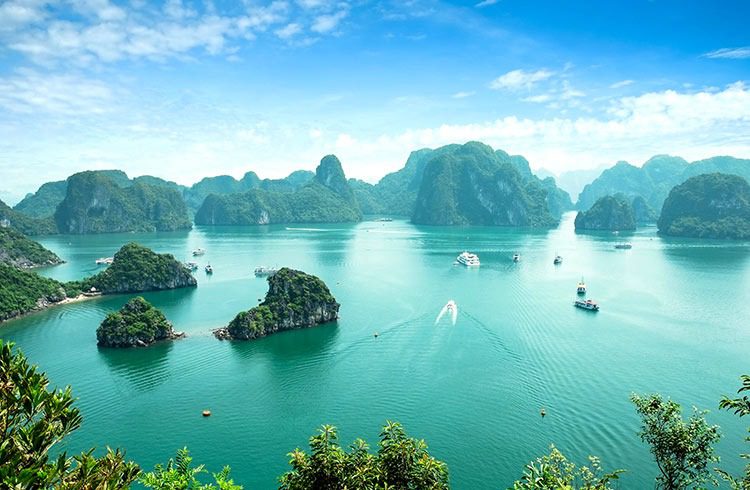
Halong Bay is probably the single most photographed place in Vietnam, and for good reason. Thousands of limestone karsts rise straight out of emerald water, many hollowed out into caves that boats can pass through or that visitors can explore on foot. An overnight cruise is the best way to experience it, since the bay looks completely different at sunrise than it does at sunset. Kayaking between the karsts and stopping at a floating fishing village add a slower, quieter side to what can otherwise feel like a busy tourist spot.
Ninh Binh

Often called Halong Bay on land, Ninh Binh has a similar landscape of limestone mountains but is set among rice paddies and rivers instead of the sea. A boat ride through Tam Coc or Trang An, where you glide beneath towering cliffs and through cave tunnels, is the highlight for most visitors. Climbing to the viewpoint at Hang Mua for a panoramic view over the rice fields is well worth the several hundred steps it takes to get there.
Sapa

Sapa sits in Vietnam’s northern mountains near the Chinese border, known for its terraced rice fields and ethnic minority hill tribes, including the Hmong and Dao communities. Trekking through the valleys, staying overnight in a homestay, and meeting local families gives a very different picture of the country than the coastal cities do. The best time to visit is during the rice planting season in May and June, or the harvest season in September and October, when the terraces turn a striking shade of gold.
Hoi An
Hoi An’s ancient town is one of the best-preserved trading ports in Southeast Asia, and it feels almost frozen in time, with yellow colonial buildings, a Japanese-covered bridge, and lantern-lit streets that come alive after dark. The town is also known for its tailors, who can make custom clothing in a day or two, and for cooking classes centered around central Vietnamese cuisine. A short ride away, An Bang Beach offers a relaxed contrast to the historic center.
Hue

As Vietnam’s former imperial capital, Hue carries a different kind of history than the rest of the country. The Imperial City, modeled loosely on Beijing’s Forbidden City, houses palaces, temples, and the remains of the old royal court, much of it damaged during the Vietnam War but still worth exploring. Hue is also known for its elaborate imperial cuisine and for the tombs of former emperors scattered along the Perfume River, which you can visit by boat or bicycle.
Da Nang

Da Nang sits between Hoi An and Hue and has grown into a modern beach city with a noticeably different feel from the rest of Vietnam. My Khe Beach is one of the country’s best stretches of coastline, and the Marble Mountains just outside the city offer caves, pagodas, and viewpoints worth a half-day trip. Da Nang also makes a convenient base for visiting Ba Na Hills, home to the famous Golden Bridge held up by giant stone hands.
Ho Chi Minh City

Formerly known as Saigon, Ho Chi Minh City is Vietnam’s largest and most energetic city, a place where scooters outnumber people and life spills onto the streets around the clock. The War Remnants Museum and the Cu Chi Tunnels, once used by Viet Cong fighters, offer a sobering look at the Vietnam War, while Ben Thanh Market and the city’s rooftop bars show its more modern, commercial side. It’s also the usual gateway for trips into the Mekong Delta.
Phu Quoc

Phu Quoc is Vietnam’s largest island, located in the Gulf of Thailand, and has become the country’s main beach and resort destination. Long Beach and Sao Beach are known for clear water and soft white sand, while the island’s national park and fishing villages offer a quieter alternative to the resort strip. It’s a popular add-on for travelers looking to end a Vietnam trip with a few days by the sea.
Nha Trang
Nha Trang is one of Vietnam’s most established beach towns, popular for diving, snorkeling, and island hopping tours around its bay. The city has a lively boardwalk and a growing nightlife scene, while the nearby Po Nagar Cham Towers offer a look at the region’s pre-Vietnamese history. It tends to attract a different crowd than Phu Quoc, with more of a resort town energy.
Dalat
Set in the central highlands, Dalat has a cooler climate than most of Vietnam, along with pine forests, waterfalls, and French colonial architecture left over from its days as a hill station. It’s known for coffee and flower farms, as well as adventure activities like canyoning near its waterfalls. Dalat offers a good change of pace if your itinerary has been mostly cities and beaches so far.
Best Places to Visit in Vietnam: How to Plan Your Route
With so many places to visit in Vietnam, the country’s long, narrow shape works in your favor when planning a route. Most itineraries move in one direction, either starting in Hanoi and finishing in Ho Chi Minh City or the other way around, covering the north, center, and south along the way rather than backtracking. A trip of around 7 to 14 days is usually enough to cover a mix of cities, nature, and beach time without feeling rushed, though shorter trips can focus on just one region, such as the north or the center. If you’d rather not plan the logistics yourself, Triphawker’s Vietnam tour packages cover most of these routes with the transport and guides already sorted.
Places to Visit in Vietnam: Frequently Asked Questions
What are the top places to visit in Vietnam?
Hanoi, Halong Bay, Hoi An, Ho Chi Minh City, and Sapa are among the most visited, covering a mix of history, nature, and city life.
How many days do I need to see Vietnam?
Around 7 to 14 days is ideal for covering the north, center, and south. A week is enough for one region if time is limited.
Which is better, Halong Bay or Ninh Binh?
Halong Bay offers dramatic sea views on an overnight cruise, while Ninh Binh gives a similar limestone landscape set among rice fields and rivers, often visited as a day trip from Hanoi.
Is Phu Quoc or Nha Trang better for a beach holiday?
Phu Quoc tends to feel quieter and more resort-focused, while Nha Trang has a livelier boardwalk and more diving and water activities.
Which city should I start my Vietnam trip in?
Most travelers start in Hanoi in the north and finish in Ho Chi Minh City in the south, or reverse the route depending on flight availability.


Leave a Reply