
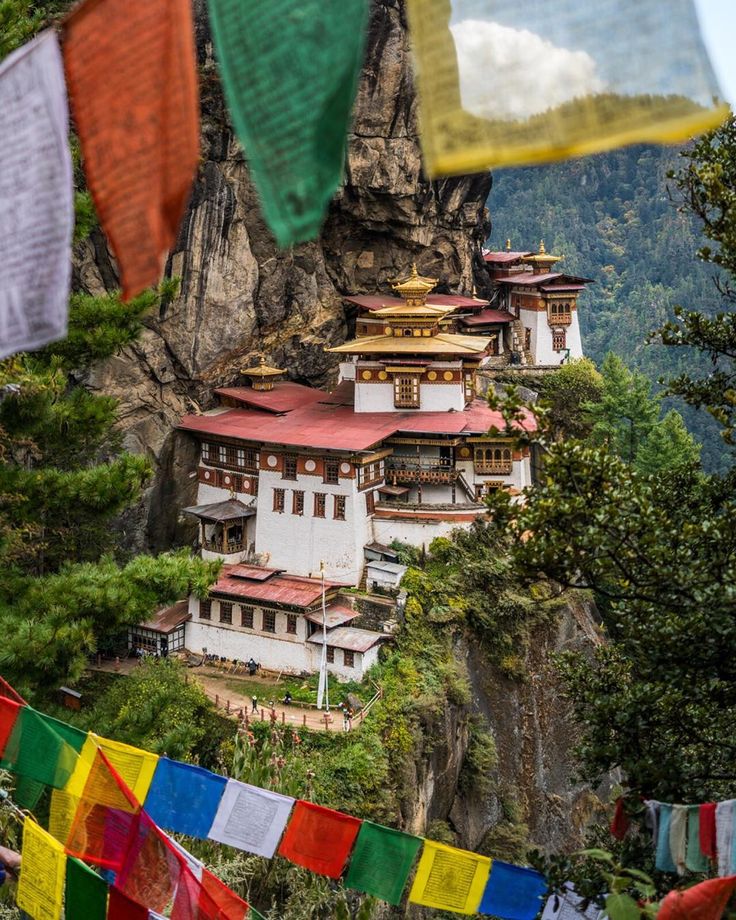
Tiger’s Nest Monastery, Bhutan

The discussion about Tourism in Bhutan always leads to the same mental picture, which shows a white monastery that hangs on a steep cliff while it floats above the mountains and clouds. The spiritual heart of Bhutan exists in Tiger’s Nest Monastery, which people recognize as Paro Taktsang. Tiger’s Nest Monastery stands at a high point above Paro Valley to serve as both a well-known tourist destination and a religious site. The site serves as a sacred place for religious visitors, while it also represents Bhutanese spiritual beliefs and creates enduring memories for travelers who visit after their trip concludes. The monastery visit in Bhutan offers more than sightseeing because visitors can experience spiritual tranquility through purposeful walking in nature.
Where Is Tiger’s Nest Monastery Located?
The Tiger’s Nest Monastery stands at a distance of ten kilometers from Paro town while it watches over the green Paro Valley. This valley lies in Bhutan. The monastery stands at a height of more than 3,000 meters on a vertical cliff, which rises about 900 meters above the valley beneath. The structure appears impossible to support from below, yet it remains stable while showing no signs of aging.
Tiger’s Nest Monastery Trek Distance, Altitude, and Height
Trekking to Paro Taktsang is one of the most memorable experiences in Bhutan. The Tiger’s Nest Monastery trekking distance is around 6-7km round trip and can be completed within 4-6 hours, depending on your own pace. The monastery is located at an altitude of 3,120 meters above sea level and is perched dramatically on a cliff face about 900 meters above the Paro Valley. Although it is quite high and quite a climb, it is completely worth it as you can enjoy the breathtaking views of the mountains.
If you are planning to trek to Tiger’s Nest Monastery, you can also have a look at our Bhutan tour itinerary.
History of Tiger’s Nest
Long before tourists arrived and long before the monastery existed, this cliff was already sacred. In the 8th century, Guru Padmasambhava, the spiritual master who introduced Buddhism to Bhutan, is believed to have meditated here in a cave. It is said that he arrived on the back of a tigress, so the place is named as Tiger’s Nest. Whether you see this as myth or metaphor, it doesn’t really matter. What matters is how deeply this story lives in Bhutanese culture. For locals, Guru Rinpoche is not a historical figure; he is a presence. And Paro Taktsang is one of the places where that presence feels strongest. The cave where he meditated still exists inside the monastery, protected and revered. Everything else—the buildings, the walls, the paths—exists because of that single sacred space.
Tiger’s Nest Monastery trek
The trek to Tiger’s Nest Monastery is not rushed, and it shouldn’t be. The path slowly climbs through forest, sometimes wide and easy, sometimes steep and demanding. There are moments when your legs ache and your breath shortens, but there are also moments when you stop—not because you’re tired, but because the view asks you to stop and enjoy the peace of that place . As you walk higher, the sounds of daily life fade away. There is no city noise, no urgency. Just wind, birds, and footsteps. Somewhere along the trail, people naturally begin to walk alone, even if they arrived together. Halfway up, there is a simple viewpoint café. From here, Tiger’s Nest reveals itself fully for the first time. Many people sit in silence, enjoying their tea or coffee with the mesmerizing view. All of this looks simply beautiful and peaceful .
Reaching Tiger’s Nest: When the Climb Finally Ends
The last stretch before reaching Tiger’s Nest Monastery is the quietest part of the journey. The stone steps narrow, the cliff feels closer, and the sound of a waterfall echoes somewhere below. Prayer flags stretch across the path, faded by sun and wind, carrying thousands of whispered wishes into the air. Your legs are tired by now. Your breath comes slower. And yet, there is no urge to rush. Everyone seems to instinctively slow down. When you finally arrive at the entrance of Paro Taktsang, there is no grand welcome sign, no dramatic reveal. Just a simple gateway, a few monks moving silently, and the monastery standing exactly as it has for centuries—unbothered by the effort it took you to reach it. That moment feels strangely grounding. You didn’t conquer the mountain. The mountain allowed you to arrive.
Standing on the Cliff

Before stepping inside, most people pause. Not because they are told to—but because the view makes them pause . From the edge near the monastery, the Paro Valley stretches far below, soft and green, almost unreal. The clouds are at eye level. The wind brushes against your face gently, not harshly. It feels less like standing at a height and more like floating. There is a strange sense of balance here. Despite the sheer drop below, nothing feels unstable. The monastery doesn’t feel dangerous, It feels anchored—rooted deeply into both stone and belief. This is when many visitors realize why Tiger’s Nest Monastery is considered more than a sightseeing spot. It is a place where you will experience peace and calmness.
Entering the Monastery
Once inside, the energy shifts completely. The lighting in the mountains gives way to a soft, dim glow. The butter lamps burn peacefully, casting shadows on walls adorned with scenes of Buddhas, protectors, and teachings. There is a scent of incense burning in the air, as well as wood aged to the point where its smell borders on, but doesn’t quite cross over into, decay. The temperature cools up slightly. There is little Photography is prohibited, but it doesn’t feel like a no-no order. In fact, my first thought is one of relief. When there is nothing or no one to photograph, you actually begin to notice. It’s a living monastery and not a museum. Monks go past you normally, and not for the sake of performance but because they are in a holy place that carries on its functions irrespective of the presence of visitors.
The Meditation Cave: The Heart of Tiger’s Nest
At the core of Paro Taktsang lies the meditation cave where Guru Padmasambhava is believed to have meditated in the 8th century. This is the reason everything else exists here. The cave is small. Humble. Almost hidden yet, the moment you step inside, the outside world disappears. People speak of “energy” in places like this, and while that word is often overused, here it feels appropriate. There is a heaviness—but not an uncomfortable one more like the weight of time, faith, and devotion layered over centuries. People enter the cave quietly and leave even more quietly. Some sit cross-legged for a few minutes. While some close their eyes. And the rest simply stand, hands folded, breathing slowly. No one tells you what to feel. And that’s the beauty of it.
The Meaning of Silence
One of the most powerful aspects of Tiger’s Nest Monastery is its silence. It’s meaningful silence .There are no announcements, no instructions , no rush, just silence and calmness . Silence here isn’t emptiness—it’s presence. In that quiet and calm environment many people realize the beauty of silence . People there observe a different world there , a world where they can simply exist without distractions , rush . Tiger’s Nest doesn’t teach through words. It teaches through stillness.
Understanding Why It Is Sacred
For Bhutanese people, visiting Paro Taktsang is not about ticking off a famous place. It is a pilgrimage. Many locals climb the trail slowly, sometimes barefoot, sometimes carrying offerings. The climb is an act of devotion, not exercise.It is believed that visiting Tiger’s Nest helps clear negative karma and bring clarity to the mind. Whether you believe in that spiritually or not, there is no denying the emotional shift that happens during the journey.This is why Tiger’s Nest Monastery is so deeply respected. It is not marketed. It does not need promotion. Its significance has survived centuries without explanation.
Preparing to Leave
Leaving Tiger’s Nest Monastery feels strangely emotional, even though nothing dramatic happens. There are no closing bells, no signal telling you it is time to go. You simply know. Something inside you gently says, this part is complete.People don’t linger near the exit the way they do at other famous places. There is no rush to find the best angle, no last-minute scramble for photographs. Cameras stay inside bags. Phones remain untouched. Instead, most visitors stand quietly for a moment, facing the valley or turning back toward the monastery one last time. That final look is not about memorizing details. It’s about acknowledgement . About silently thanking the place for allowing you to arrive, to walk its paths, to sit in its quiet. There is a sense of gratitude that settles in naturally, without effort. Few people speak it out loud, yet it feels shared.
When the descent begins, it happens slowly. The stone steps that felt demanding and endless on the way up now feel familiar, almost welcoming. Your legs are tired but yes the tiredness feels earned rather than heavy. The breath is steady. Your shoulders feel lighter. It’s as if the climb took something from you—stress, noise, restlessness—and gave back something quieter in return.
The Walk Down

Descending from Tiger’s Nest is a completely different experience. Again, the same forest is all around you, the same road winds down, but the ambience has changed. talks have resumed, but they are hushed now. Voices are tempered. Words are selected meticulously. People talk in thoughts rather than in remarks. Many talk about their impressions in the monastery. They talk only about the trees, the sunlight, the gentle breeze. Many people walk in silence, content to allow the feeling to seep in on its own. People laugh, enjoy, and everything comes naturally, unfettered.
Nobody is looking at the time. The forest seems alive in a way that you may not have noticed on the way up. The pines appear greener, the aroma of the evergreen trees more pungent. The air seems cooler in your skin. Things haven’t changed at all—except your perception. You see more . The hum of the wind in the leaves. The beat of the bird calls from out of sight. The way the sun filters patchily through the trees.
Occasionally, the way is enough to catch a final glimpse of Tiger’s Nest Monastery. By this stage, it is quite common for it to be shrouded in clouds, rising and falling in a game played in silence. Now, it does not seem to have to be in full view. They have seen what needed to be seen. There is an understanding that it is there only when it wants to be.
When the Mountain Slowly Releases You
As you continue descending, the physical world gradually returns. You notice the effort in your knees. The slight ache in your calves. The dust on your shoes. Yet none of it feels unpleasant. Instead, there is a growing awareness of how present you feel. Your mind is not racing ahead to the next destination. It is not replaying notifications, deadlines, or unfinished conversations. It is here, fully engaged with the movement of walking and the quiet of the trail. This is something Tiger’s Nest gives without trying. It does not teach through instruction or explanation. It teaches by creating space—space where your thoughts can slow down enough to settle.
Carrying the Experience With You
Long after the trek ends, Tiger’s Nest stays with you. Not as a photograph neatly saved in a gallery. Not as a location pinned on a map. Not as a checklist item marked “done.” It stays as a feeling—quiet, steady, and surprisingly persistent. Days later, you might find yourself thinking about the climb while sitting in traffic. Tiger’s Nest reminds you that meaningful journeys require effort—not just physical effort, but patience. It shows you that silence is not empty, that it can hold more meaning than words ever could.
How Tiger’s Nest Changes Perspective
However, one discernible shift takes place after one has visited Paro Taktsang. It doesn’t happen suddenly. It’s nothing that you get answers to or make life-changing choices about on a visit to Tiger’s Nest. Rather, this shift happens in a manner that’s far more subtle—and perhaps even sustainable. It’s a realization about how often we find ourselves hurrying through life, accomplishing more, accomplishing better, accomplishing more, accomplishing better, accomplishing more, accomplishing better, accomplishing more. It’s a realization about how often we forget to merely exist, about how often clouds drift by like that, purposeless and picturesque, on a cliffside at Tiger’s Nest. Tiger’s Nest doesn’t tell you how to change your life. It merely points a way of living that happens to be attuned to balance, to toil, to tranquility.
This is why there can be such a large variation between the experiences that each traveler may have. Two individuals can hike the same path and stand in the same halls but derive a wide range of meanings. The monastery never imposes itself on you. It meets you wherever you are.
Final Thoughts: Why Tiger’s Nest Is Unforgettable
As mentioned earlier also Tiger’s Nest Monastery does not change you dramatically.
It changes you quietly. This place doesn’t overwhelm you with information, but offers space. It doesn’t demand belief but invites reflection. It doesn’t promise transformation but allows it. And that is why Tiger’s Nest Monastery is not just a destination in Bhutan. It is not simply a famous sightseeing spot. It is a journey—one that begins with a climb, deepens in silence, and stays with you long after the mountain disappears from view.


Leave a Reply