
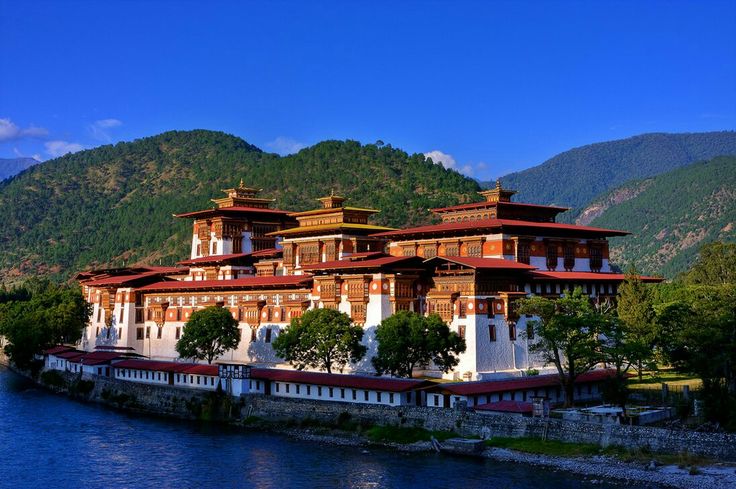
Punakha Dzong: Where Bhutan’s Historicity, Spiritualism, and Beauty Flow Together

Certain places in this world don’t merely awe you but somehow stays within you long after you’re gone. Punakha Dzong is one of them. Situated at a river junction, where the Male and Female rivers meet. This beautiful fortress is so perfectly integrated around this natural haven that it seems less like a monument and more like an unfolding tale. As you approach it and cross that long wooden bridge that takes you over the River Mo Chhu, you experience a pause in time that tempts you to not merely absorb what your eyes are seeing but also to absorb what you’re feeling.
Situated in the capital of Bhutan, Punakha Dzong is more than just an architectural wonder. It is the representation of the Bhutanese soul, their spirituality, their historical strength, and their assimilation with nature. Also known as the “Palace of Great Happiness,” Punakha Dzong is one of the important and breathtaking sights of Bhutan, and it’s one of those places where one feels grounded yet amazed at the same time when one decides to pay it a visit.
The Setting of Punakha Dzong Between Two Rivers

But it is the positioning of the Punakha Dzong that makes it completely distinctive and unforgettable. While most dzongs are built on top hills, this one rests gently in a plains area . The Pho Chhu (the Male River) and Mo Chhu (the Female River) meet. This represents harmony and unity. It is difficult to miss this experience as you are standing there, listening to the river flowing gently by.
The rivers curl around the dzong as if nature is protecting it, reflecting off its white-painted walls and golden roofs. In spring, everything around is alive with colors as jacaranda trees flower. Winter brings clear blue skies to Punakha Dzong, adding to its serene atmosphere.
A Glimpse Into History That Still Lives
Punakha Dzong was established in the year 1637 by the unifier of Bhutan, Zhabdrung Ngawang Namgyal. At that time, Punakha Dzong not only belonged to a religious institution. It also represented the governmental seat of the kingdom of Bhutan. Punakha Dzong had been the capital of the country for many years and saw many crucial events in the history of Bhutan. Yet perhaps the most interesting part of Punakha Dzong is how much it seems to serve living history.
The corridors and courtyards are not simply a relic of a bygone era; they are indeed occupied today. It is also the winter residence of Je Khenpo, the highest abbot of Bhutan. Every year, it swells with the presence of some twelve thousand monks.They arrive at this dzong when winter sets in. The dzong has faced fires, earthquakes, and floods through the ages, and each time, it has been rebuilt with the utmost care. The durability of the Punakha Dzong reflects the durability of Bhutan itself. A land that has managed to retain its tradition and change at the same time.
Architecture That Speaks Without Words

First of all, the magnitude of Punakha Dzong appears impressive. The massive cyclopean white walls are raised confidently along the banks of the rivers and topped with intricately carved wooden panels and several-tiered golden roofs. But once inside, a complete change comes over one. The sounds of the outside world are muffled, and a sense of reverence and awe replaces them. The dzong is designed around several courtyards with different uses for each of them. The dominating tower is called the utse; it holds religious reliquia artifacts and shrines. Murals of Buddhist precepts, tales of the holy ones, as well as stories from mythological Bhutanese epics, adorn the walls of the structure. Even without comprehending their meaning, the colors combined with the facial expression engage you to the extent that you find yourself reflecting on them.
“Each detail of Punakha Dzong’s architecture is deliberate. The sloping roofs that shield it from heavy rainfall and thick walls that had a defensive purpose are a seamless blend between beauty and utility.” The carving can also be appreciated on a closer inspection. The craftsmanship involved here is a result of the efforts and dedication of numerous artists who worked on such pieces.
Spiritual Heart of Bhutan- Punakha Dzong
Punakha Dzong is much more than a historical site; in fact, this is a very spiritual site. There is something about the atmosphere here. This is a place where the air is thick with meaning, yet at the same time, there is a certain lightness to this air, as if it is full of peace. As monks chant their prayers in the temples, the sound resonates in the corridors. One of its most revered relics is the Rangjung Kharsapani, a self-image of Avalokiteshvara, which has a very pious importance to Bhutanese people.
Devotees flock to Punakha Dzong from across Bhutan to seek its blessings, especially during major religious events. As a tourist and even for those who may not know much about Buddhism, there is a sense of peace that comes with just sitting in one of the courtyards without any words being spoken. Observing the monks walking past in their scarlet robes as they pray on their prayer wheels or recite scripture, you see why the country is known as the land of happiness—not because everything is wonderful but because the principle of mindfulness is so embedded in their everyday lifestyle.
Masked Dance at the Punakha Tsechu

If you are fortunate enough to be found in Punakha during the Punakha Tsechu, you get to see the most colorful facet of the dzong. This religious festival is arranged every year to showcase their faith, culture, and tradition. They come with their colored costumes to the courtyards of the dzongs, filling it with happiness.
The “Hidden Dances,” or “Cham,” are performed by masked monks as well as lay participants. Every step of each dance is replete with meaning. The masked dance is not only a recreational performance. It encompasses meditations as well as religious expeditions. To experience the performance in the historical fort of Punakha Dzong is to enter into the holy narrative that has been unfolding down the passage of generations. The festive ambience is that of joy and devotion. Those who attend are relatives themselves because friends are reunited after many months, and total strangers are also welcome with open arms. This is when many realize that the real essence of “Punakha Dzong as Heart of the town” is what is realized, as opposed to it being only an ancient history monument.
A Walk Through Timeless Corridors
A visit to Punakha Dzong should be done at a leisurely pace. There is no hurry. Take time to make the corridors reverberate with footsteps. Pause to take in the views of the rivers from the windows. Enjoy the smell of incense, the light of the butter lamps, and the chanting of prayers. The wooden cantilever bridge that takes visitors to the dzong is itself quite an experience.
While crossing the bridge, one gets a first glimpse of the dzong. Each step seems to make it larger and more majestic. It is a moment that many visitors do not forget, with some of them claiming that it is one of the most beautiful approaches to any monument they might have ever seen. Inside, there might be some areas where the use of photography is restricted. But in a way, that’s a blessing in disguise because it challenges you to be there in the moment. Don’t take the pictures, absorb the atmosphere
Best Time to Visit Punakha Dzong
The weather in Punakha is relatively balanced and comparable to that in other regions of Bhutan. This makes it a very pleasant destination for tourists most of the year. The spring season, from March to May, is very picturesque with blooms and a bright blue sky. In order to experience crisp and fresh air, Autumn is the best season. Winters are the off-season when the destination will be less populated. Summers are when the region will be filled with greenery; although, rain might interfere with travel plans. Whether it’s any season or the other, in both instances, the experience of traveling to Punakha Dzong will bring a certain source of attraction. If you are planning to visit Punakha Dzong , you can also have a look at our Bhutan tour itinerary.
How Punakha Dzong Creates Lasting Memories
What makes Punakha Dzong so special? It is not merely beauty or its historical value, but also its effect on you. There is an equilibrium in this place, in which the religious and the secular, the ancient and the contemporary, the natural world and human creation coexist in perfect proportion. It doesn’t overwhelm you; rather, it invites you to pause. Visitors often depart satisfied with satisfaction from a renowned landmark, only to find meaning that exceeds mere satisfaction. Of course, there is history, architecture, and beauty to be found at Punakha Dzong, but it is a place that subtly lets one understand the importance of deriving happiness amidst the stillness, inherent strength with grace, and the possibility of retaining history with reverence.
Final Thoughts: A Place You Don’t Just Visit, You Experience
Punakha Dzong isn’t the sort of place you visit as you check off the to-do list of travel activities. It’s the sort of place that demands your time, your participation, and your willingness to open your mind. Whether you’re the historical sort, the spiritual sort, or simply the sort who finds beauty in destinations, Punakha Dzong has so much to share. As you depart the Punakha Dzong and glance back for the last time. At the sight of the rivers and the mountains huddled behind the fortress-monastery complex, you realise with a silent understanding that you have just experienced something very unique in the past few hours—the spirit of the people of Bhutan is represented in this fortress-monastery complex unlike any other structure around the world.
But even after your journey is over, the memory of Punakha Dzong itself will reverberate through you much like the rivers that bathe this land.


Leave a Reply