
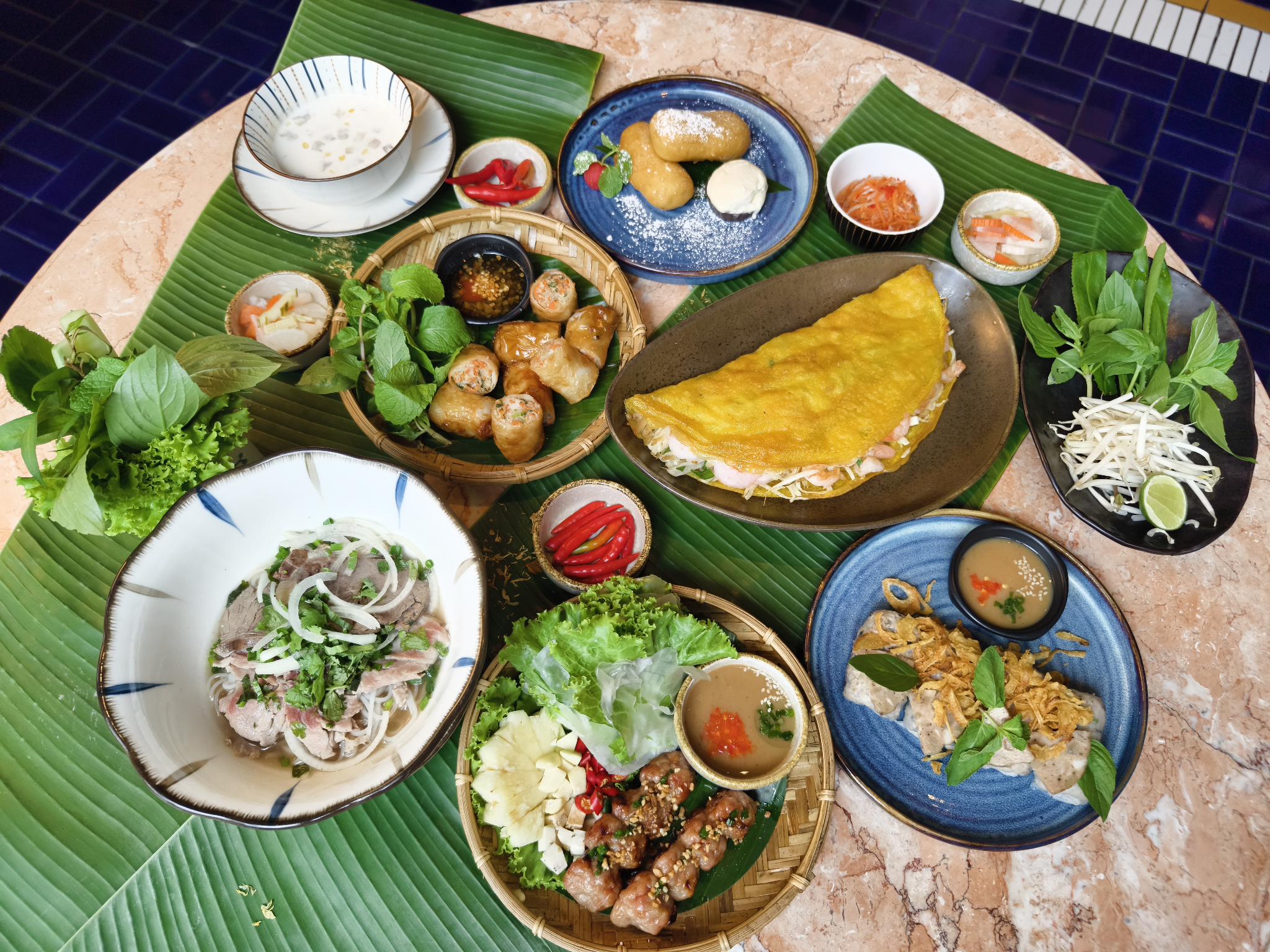
Vietnam food culture is built around fresh ingredients, shared meals, and a careful balance of sweet, sour, salty, and spicy flavors that Vietnamese cooks have perfected over generations. Understanding Vietnam’s food culture before you travel helps you eat like a local instead of just ticking off famous dishes from a list.
Why Vietnamese Food Is Built on Balance
Vietnamese cuisine favors freshness over heavy sauces or deep frying. Cooks use herbs like mint, cilantro, Thai basil, and perilla in almost every dish, often serving them raw on the side so you can add as much as you like. Fish sauce, lime, chili, and sugar balance each dish rather than overpower it, and rice forms the backbone of nearly every meal. This focus on balance is at the core of Vietnamese food culture, shaped by the country’s climate and agriculture as well as a long history of Chinese, French, and regional influences blending into something distinctly Vietnamese.
Street Food: The Real Heart of Vietnam Food Culture

Street food is where Vietnamese food culture truly lives. A few plastic stools, a small charcoal stove, and a short menu are often all it takes to serve some of the best food in the country. Some dishes to look for:
- Pho. A fragrant noodle soup made with beef or chicken broth, simmered for hours. No two bowls taste quite the same depending on the region and the vendor.
- Banh mi. A French-influenced baguette sandwich stuffed with pork, pate, pickled vegetables, and herbs. It shows how colonial history became part of everyday Vietnamese eating.
- Bun cha. Grilled pork served with rice noodles and a tangy dipping sauce. This Hanoi specialty became famous worldwide.
- Goi cuon. Fresh spring rolls wrapped in rice paper with shrimp, herbs, and vermicelli. A lighter, no-cook option popular throughout the country.
Regional Differences Across Vietnam
Vietnam stretches long and narrow from north to south, and its food changes noticeably as you move across the country.
Northern Vietnamese food, centered around Hanoi, stays subtle and less sweet. Cooks emphasize clear broths and balanced seasoning, a style shaped by the cooler climate and proximity to China.
Central Vietnamese food, especially in Hue, turns spicier and more elaborate. This reflects the region’s history as the imperial capital, where royal kitchens developed intricate multi-course meals.
Southern Vietnamese food, around Ho Chi Minh City and the Mekong Delta, leans sweeter and more tropical. Cooks use coconut milk, more sugar, and a wider variety of fresh produce thanks to the fertile delta.
Try the same dish, pho or bun bo, for example, in different regions. It’s one of the easiest ways to understand how local geography shapes Vietnam’s food culture. The same dish, such as pho or bun bo, in different regions is one of the easiest ways to understand how local geography shapes Vietnam’s food culture.
Vietnamese Coffee and Drinking Culture

Coffee is practically a national pastime in Vietnam. Ca phe sua da, strong drip coffee sweetened with condensed milk and served over ice, is an everyday ritual for millions of people, usually enjoyed slowly at a street-side café while watching the world go by. Egg coffee, a Hanoi specialty made with whipped egg yolk and condensed milk, is a richer, dessert-like variation worth trying at least once.
Beyond coffee, fresh sugarcane juice, iced tea, and bia hoi round out the daily rhythm. Bia hoi is a light draft beer sold cheaply on street corners in the evenings, especially in northern cities.
Dining Etiquette and Everyday Meal Habits
Vietnamese families usually share meals rather than plate them individually. Rice sits at the center of the table, with several other dishes placed around it for everyone to share. Chopsticks are the standard utensil, and a few habits are worth knowing before you sit down:
- Avoid sticking chopsticks upright in a bowl of rice. This resembles incense sticks used at funerals.
- Don’t pass food chopstick-to-chopstick, for the same reason.
- Wait for the eldest person at the table to begin eating.
- Feel free to slurp your noodle soup. It’s normal and even expected.
Street food stalls stay informal, but sit-down family meals follow these customs more closely, especially in smaller towns.
Food and Festivals in Vietnam

Food plays a central role in Vietnamese festivals and celebrations, and no discussion of Vietnam food culture is complete without them. During Tet, the Lunar New Year, families prepare banh chung, a dense square cake of glutinous rice, pork, and mung beans wrapped in banana leaves. This dish takes hours to prepare and symbolizes gratitude to ancestors and the earth.
The Mid-Autumn Festival brings banh trung thu, mooncakes filled with lotus seed paste, egg yolk, or mixed nuts, traditionally shared while watching the full moon.
Even everyday ancestor worship rituals involve offering food at family altars before the living eat it, a reminder of how deeply food and tradition are intertwined in Vietnamese life.
How to Experience Vietnam Food Culture on Your Trip
Eat where locals eat rather than sticking only to restaurants aimed at tourists. A street food tour in Hanoi or Ho Chi Minh City with a knowledgeable local guide introduces you to stalls you’d likely miss on your own. A hands-on cooking class, especially in Hoi An or Hue, gives you a deeper understanding of how these flavors come together. Visit a local market early in the morning to see the ingredients before they become dishes. If your trip lines up with Tet or the Mid-Autumn Festival, join a family meal if you get the chance. It’s one of the most memorable ways to experience Vietnamese hospitality firsthand.
Explore Triphawker’s Vietnam tour packages for guided food experiences across Hanoi, Hue, and Ho Chi Minh City.
Frequently Asked Questions
What is Vietnam’s most famous food?
Pho, a noodle soup made with beef or chicken broth, herbs, and rice noodles, is Vietnam’s most internationally recognized dish. Banh mi and bun cha follow close behind in popularity.
Is Vietnamese food very spicy?
Not always. Northern Vietnamese food tends to be mild, while central Vietnamese food, especially around Hue, turns noticeably spicier.
What should I try for Vietnamese street food?
Start with pho, banh mi, bun cha, goi cuon, and ca phe sua da. Then try whatever the busiest stall nearby is serving.
Is it safe to eat street food in Vietnam?
Generally, yes, especially at stalls with high turnover and freshly cooked food. Busy, popular vendors are usually a good sign of quality and safety.
What is the best region in Vietnam for food lovers?
Every region offers something distinct. Hue is often considered the most food-focused, thanks to its imperial culinary history, while Ho Chi Minh City offers the widest variety.


Leave a Reply